
How Namutebi Is Redefining the Metal Fabrication Industry

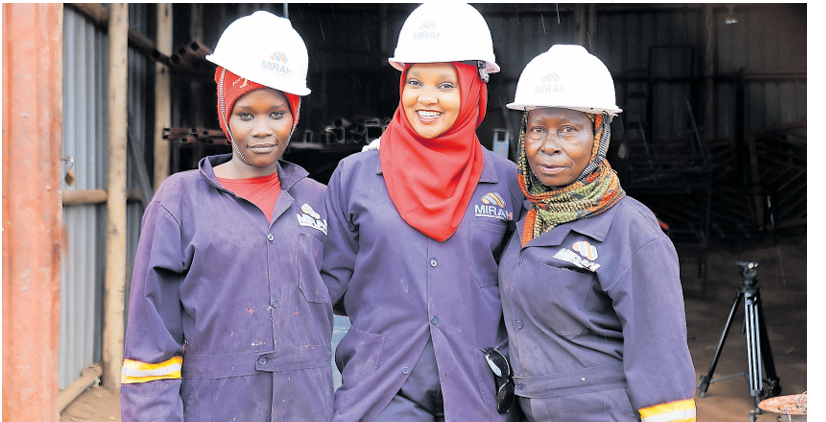
Step into a bustling metal fabrication workshop in Kabowa–Ndeeba, Rubaga Division, and the scene defies expectations. Amid the clang of machinery and sparks of welding torches are confident, skilled women cutting metal and welding with precision.
This is Mirah Metal Fabrications Limited, an initiative led by Shamirah Namutebi — a lawyer by profession, manager at Ham Enterprises (Makerere branch), and a trailblazer redefining gender roles in one of the most male-dominated industries.
From Law to Metal Works
Namutebi’s journey into metal fabrication began through her legal work at Baraka Legal Associated Advocates, an entity under Ham Enterprises. There, she encountered countless women seeking legal help, many burdened by despair.
“I witnessed pain. I witnessed a lack of hope. I witnessed women who were giving up on life,” she recalls.
A turning point came in 2019, when her uncle approached her for financial support after winning an FAO contract to supply 10,000 cattle feed mixers across Uganda.
Namutebi agreed on one condition: that five vulnerable women she had previously assisted through pro bono legal services be trained in fabricating the machines.
By the time the contract was completed, the women had gained practical skills — and proof that they could thrive in the trade.
Starting Small, Thinking Big
Inspired by the success, Namutebi invested about Shs5 million in 2020, during the Covid-19 lockdown, to purchase basic metalworking tools.
“I started with one welder, a welding machine, one grinder, and small equipment, working from my home compound,” she says.
With most activities halted at the time, the team focused fully on fabrication. Their progress soon caught the attention of businessman Hamis Kigundu, who awarded them contracts for an agro-processing project and later for maintenance and repair works at Nakivubo War Memorial Stadium.
Building a Women-Powered Workshop
Today, Mirah Metal Fabrications Limited employs 52 women from diverse backgrounds. Some are technical school graduates seeking hands-on experience, while others had never worked with metal before joining.
Namutebi uses visual and practical teaching methods to make metalwork accessible, ensuring every trainee can learn regardless of prior experience.
Her impact has reached international levels, with the World Bank visiting the workshop and expressing interest in expanding the initiative.
Products, Services, and Pricing
Mirah Metal Fabrications offers a wide range of services, including:
- Metal fabrication
- Structural steel works
- Welding and repair services
- Custom metal designs
Pricing varies by material, size, and design. Doors typically start from Shs500,000, while windows go for Shs300,000 and above.
“We began with everyday products — windows, doors, kids, furniture, then expanded to trucks, cars, guards, and boda-bodas,” Namutebi explains.
Marketing Through Trust and Networks
Namutebi markets her business through Business Network International (BNI), social media, and strong referral networks. Her mission to empower women has also attracted significant media attention, further boosting trust in the brand.
“The women are now trusted. They bring clients here because this is their home,” she says.
Facing Bias and Breaking Barriers
Despite the progress, challenges remain. Societal bias against women in fabrication persists, often questioning their competence in heavy industrial work.
“That doubt is what pushes me never to give up,” Namutebi says.
Sourcing quality raw materials can also be difficult, a challenge she manages by relying on experienced procurement personnel.
Best Moments, Hard Truths
For Namutebi, the most rewarding moments come when former trainees return to thank her for transforming their lives.
“When they walk into my office saying their lives are better than before, it inspires me to do more,” she says.
Yet, she acknowledges that the hardest challenge is mindset change.
“Society has taught them that fabrication is for men. Changing that mindset is my first task,” she explains.
Looking to the Future
Namutebi plans to expand her training programmes across Uganda, establishing additional centres to empower more women and youth.
“I don’t focus on numbers. If we change mindsets, empowerment will follow,” she says.
Responses