
How Atuhurra Turned Her Pain into Purpose

At just 18 years old, heavy with child, Marjorie Atuhurra ran away from home. She feared becoming an example of someone who had wasted her parents’ resources.
“I ran away from home in Matuga and found refuge among rural women in Mpigi District. When I told my parents about the pregnancy, my father looked disappointed, while my mother said she had nothing to do with me,” she recalls.
The women of Mpigi gave her hope when all seemed lost. They taught her how to care for herself during pregnancy and after childbirth. Living alone in a one-roomed house, Atuhurra was grateful when her siblings came to check on her. It was they who later helped reconcile her with her parents.
Despite this reunion, her bond with the community remained strong, and she returned to Mpigi. Her return came just in time to save a teenage girl who was about to be married off.
A Turning Point
In another one-roomed house, Atuhurra took in the girl.
“While her parents wanted to marry her off, Prossy wanted to return to school. I vowed to try and help,” she says.
Although she faced resistance, Atuhurra promised Prossy that she would return her to school in 2016, on one condition: as Atuhurra worked, Prossy would take care of her baby.
Another moment changed everything. One day, Atuhurra noticed Prossy fidgeting in a corner with a burnt banana leaf. When she asked why, she learned that Prossy’s mother had taught her that this was how to manage menstruation.
“This was so shocking because I wondered how the leaf would help,” Atuhurra recalls.
That night, she borrowed Shs60,000 from her mentor. The next day, she went to Owino Market and bought materials to make reusable sanitary pads for Prossy.
Those actions became the foundation of Gejja Women Foundation, a non-governmental organisation raising awareness on menstrual hygiene and related issues.
Formalising the Mission
The organisation is registered with the Uganda Registration Services Bureau (URSB). Atuhurra describes the process as manageable with guidance from legal experts, although it required patience and strict adherence to legal standards.
The Beginnings
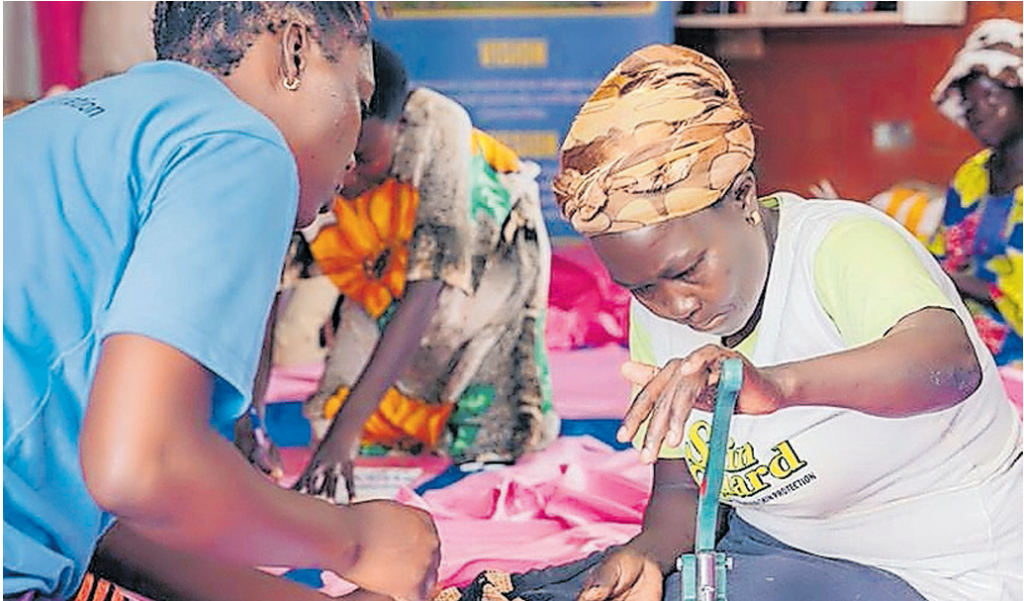
Soon, Atuhurra realised that there were many girls like Prossy. She mobilised others to help make reusable pads, which they distributed freely. Having learnt tailoring skills earlier, she put them to use.
Well-wishers and friends supported the initiative through donations.
“We also engaged in educating girls about the pads and how to maintain menstrual hygiene,” she says.
Their first major order came unexpectedly: a client requested 1,000 Safe Girl pads within 24 hours. The team worked through the night, but a power blackout forced them to move locations. By morning, they were 100 pads short.
Out of courtesy, Atuhurra called the client to explain the situation, but instead, she was insulted and labelled incompetent. The Shs750,000 deal was cancelled.
Devastated, Atuhurra learned a critical lesson: always ask for a down payment before starting work.
The pads were distributed freely as before. Hope returned when they secured new paying contracts, including one from Uganda 4 Her, which paid Shs2.5 million for 2,000 pads.
They later partnered with Stanbic Bank Uganda, which purchases the pads at a wholesale price of Shs6,000 and distributes them within communities it supports.
Each pack contains two pads, a cotton knicker, a bar of soap, a storage bag, and a user booklet.
Training and Capacity Building
The journey required Atuhurra and her team to learn business skills such as costing and pricing. Business incubation and courses from Social Innovation Academy, Start-up Uganda, and Sinapis proved invaluable.
“We learned how to budget, plan, and understand price fluctuations in the global market,” she explains.
Additional training included social entrepreneurship programmes with Acumen and Vital Voices Grow, product development at UIRI, leadership development, gender-based violence prevention, grant writing, and community development.
These trainings strengthened the organisation’s management capacity and long-term sustainability.
Organisational Structure
Gejja Women Foundation and Safe Girl Initiative Uganda now operate under a structured governance system comprising a Board of Directors, an Executive Director, and departmental heads for programmes, finance, and community outreach.
They employ about 32 full-time staff, including counsellors, programme coordinators, and eight volunteers. Most are trained community educators, with some holding formal qualifications in social work and related fields.
Expanded Services
The organisation primarily serves women and girls in underserved communities, particularly those vulnerable to gender-based violence, early marriage, and exploitation. This includes refugees and socially displaced populations.
They also provide educational support to girls and women seeking to return to school.
Beyond menstrual health, the organisation runs permaculture and regenerative agriculture projects at the Gejja model farm and manages a seed loan programme for youth and female farmers.
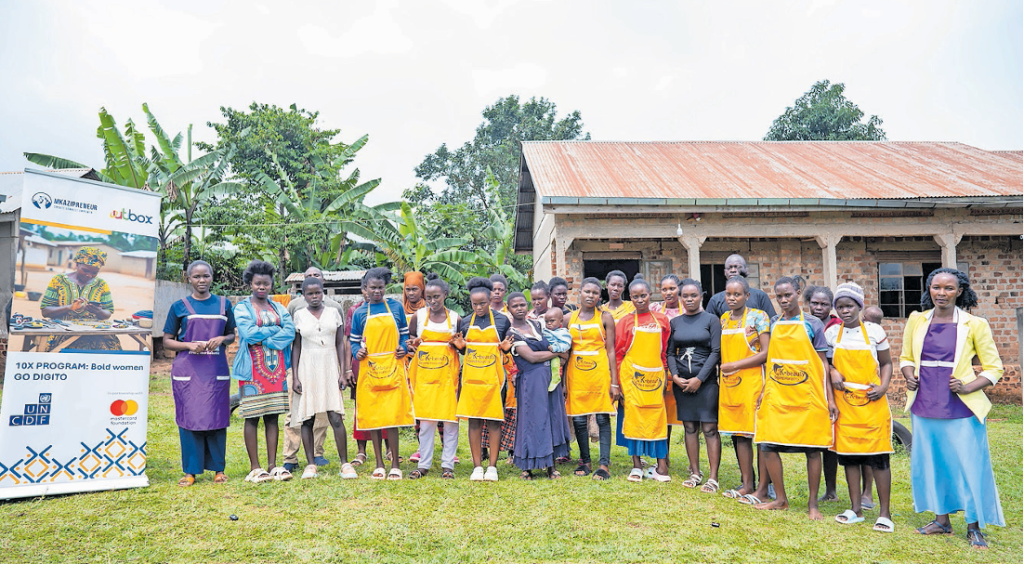
“We also run empowerment programmes through our acceleration initiative, equipping men and women with personal, professional, and business management skills before providing startup capital,” Atuhurra explains.
Their flagship programme remains menstrual hygiene management, including the production of Safe Girl Reusable Sanitary Pads, which are both donated and sold.
Most services are community-based and offered free of charge, supported by grants and donations.
Funding and Sustainability
Atuhurra initially funded the organisation using personal savings, followed by community fundraising and grants. Securing funds was difficult due to limited access to formal grant opportunities at the start.
Persistence paid off. Their first grant was €2,500 (about Shs10 million).
Since most early funding was non-repayable, repayment was not an issue. Income from training services is now reinvested into the organisation.
Marketing and Outreach
The pads are supplied to supermarkets, pharmacies, and retail shops. They have also partnered with wholesalers in Kikuubo.
Marketing channels include social media, a website, and the women’s centre, which hosts visitors regularly.
“The land housing the centre was bought using a donation received in 2018, which also funded construction. We are glad there is a place women and girls can call home,” she says.
Challenges
Importing raw materials from Kenya, China, and the UK has been challenging due to high costs, shipping delays, and unpredictable tariffs.
These disruptions affect production timelines and pricing. The organisation is actively exploring local sourcing options.
Funding constraints and community perception challenges persist, addressed through diversified funding and sustained community engagement.
Despite the hurdles, the foundation has:
- Empowered 350+ women through business programmes
- Reached over 100,000 girls through menstrual hygiene outreach
- Produced 50,000 Safe Girl sanitary pads
- Supported 45 women under the seed-loan programme
Annual expenses stand at approximately €120,000 (Shs492 million). The highest weekly sales recorded were Shs1.2 million across all products.
Looking Ahead
Atuhurra admits she wishes she had started earlier, but remains encouraged that timing matters.
The foundation is now building a Women’s Centre in Mpigi, envisioned as a hub for female innovation, modern farming techniques, and entrepreneurship stories.
Responses